



The Full History of Copper Gutters

Summary:

Roof drainage predates modern buildings by thousands of years, evolving alongside permanent architecture as societies sought ways to control rainwater, protect walls, and preserve structural integrity. Among the materials used over time, copper stands out for its early adoption, adaptability, and persistence across civilizations. Tracing the history of copper gutters reveals not a decorative trend, but a functional lineage tied to engineering progress, metallurgy, and long-term building performance.


Early Drainage Systems and the First Use of Copper (Pre-Roman Era)

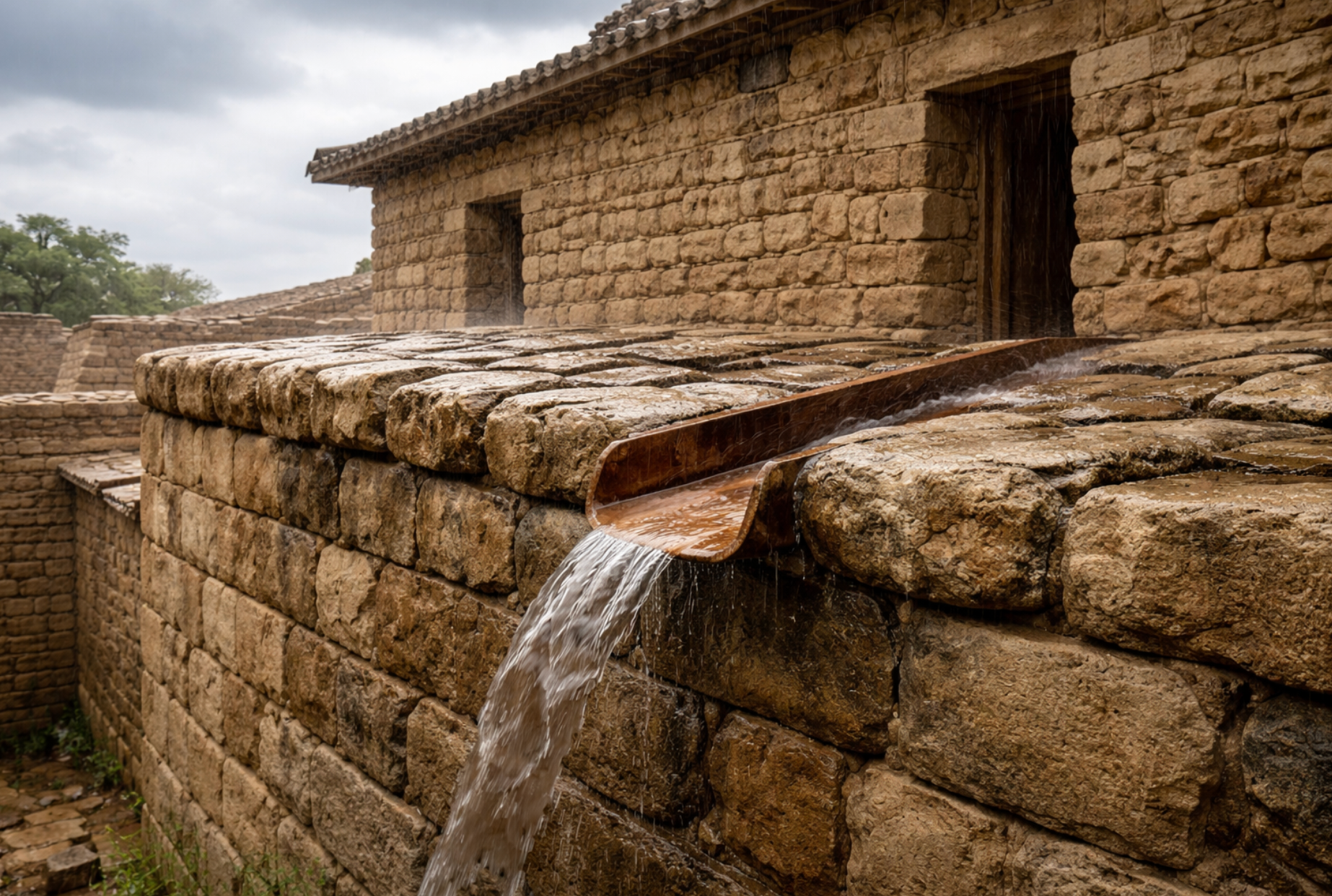
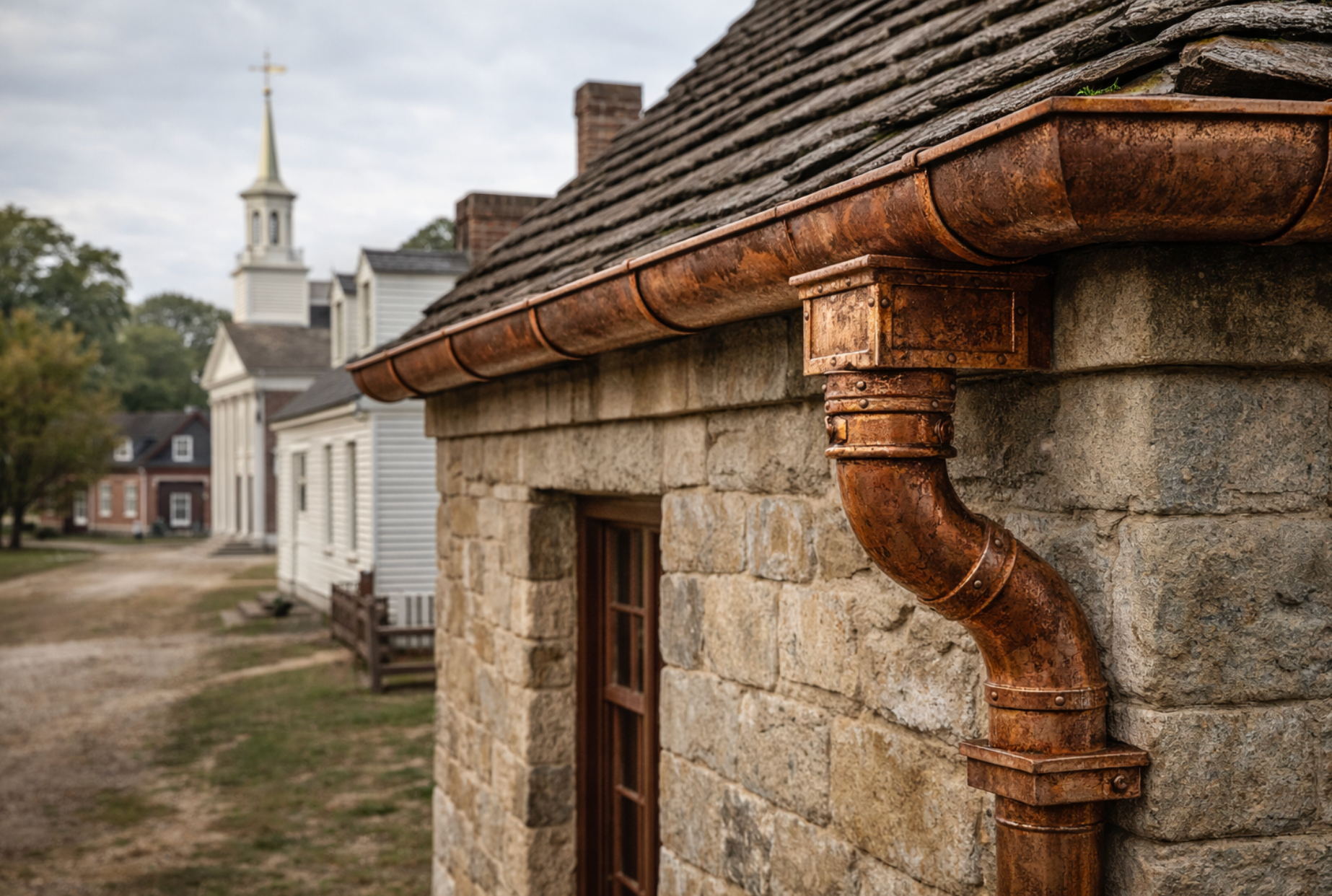
copper drainage system in pre-roman times

Long before formal gutters existed, ancient civilizations managed rainwater through carved stone channels, clay spouts, and sloped roof edges designed to direct runoff away from walls. As copper metallurgy developed during the Chalcolithic period, early builders began experimenting with copper sheets and channels for water conveyance, taking advantage of the metal’s malleability and resistance to corrosion. Archaeological findings in Mesopotamia and the Near East indicate that copper was used for water-handling applications as early as 3000 BCE. Sources:  MET Museum,  Britannica


Roman Engineering and the Formalization of Gutter Systems

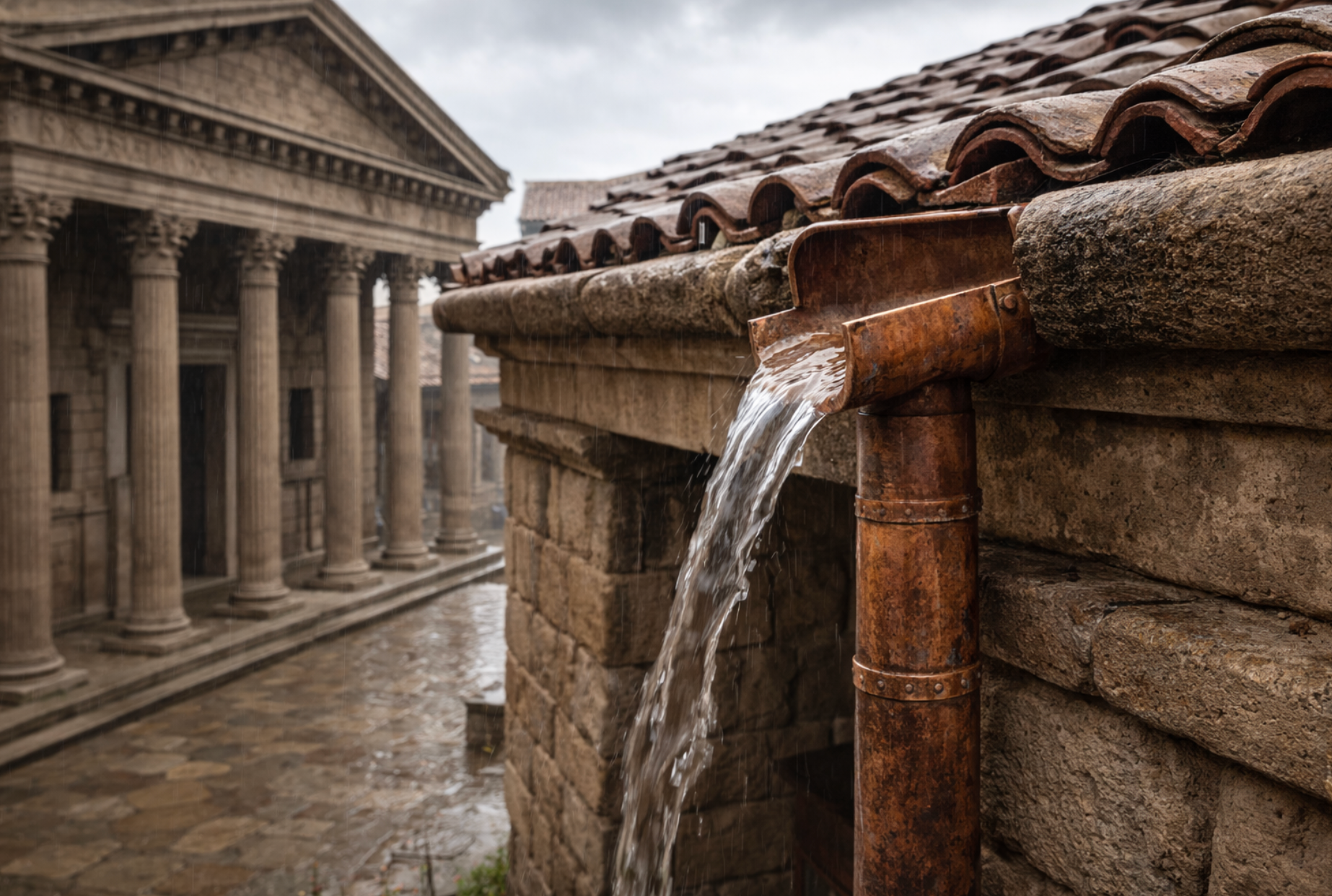
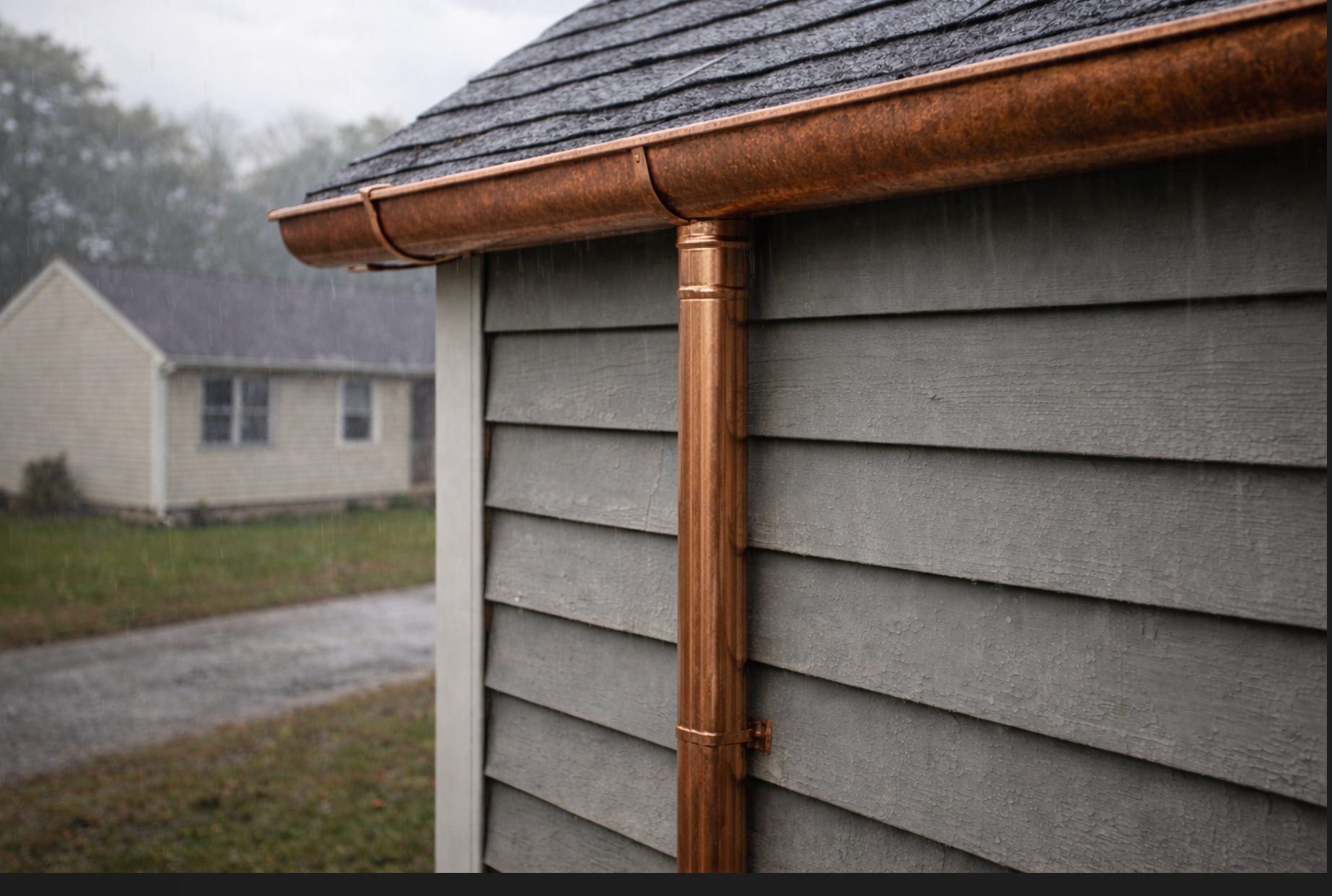
roman engineering drainage systems and gutters

Roman architecture marked a turning point in roof drainage, introducing purpose-built systems integrated into large civic and residential structures. Romans used metal-lined channels, scuppers, and downspouts to control rainwater on tiled roofs, often incorporating copper or bronze alloys where longevity was required. These systems complemented aqueduct engineering principles and reflected a broader Roman emphasis on durability and maintenance over time.. Sources:  University of Chicago,   Copper.org


Copper Gutters in Medieval Europe

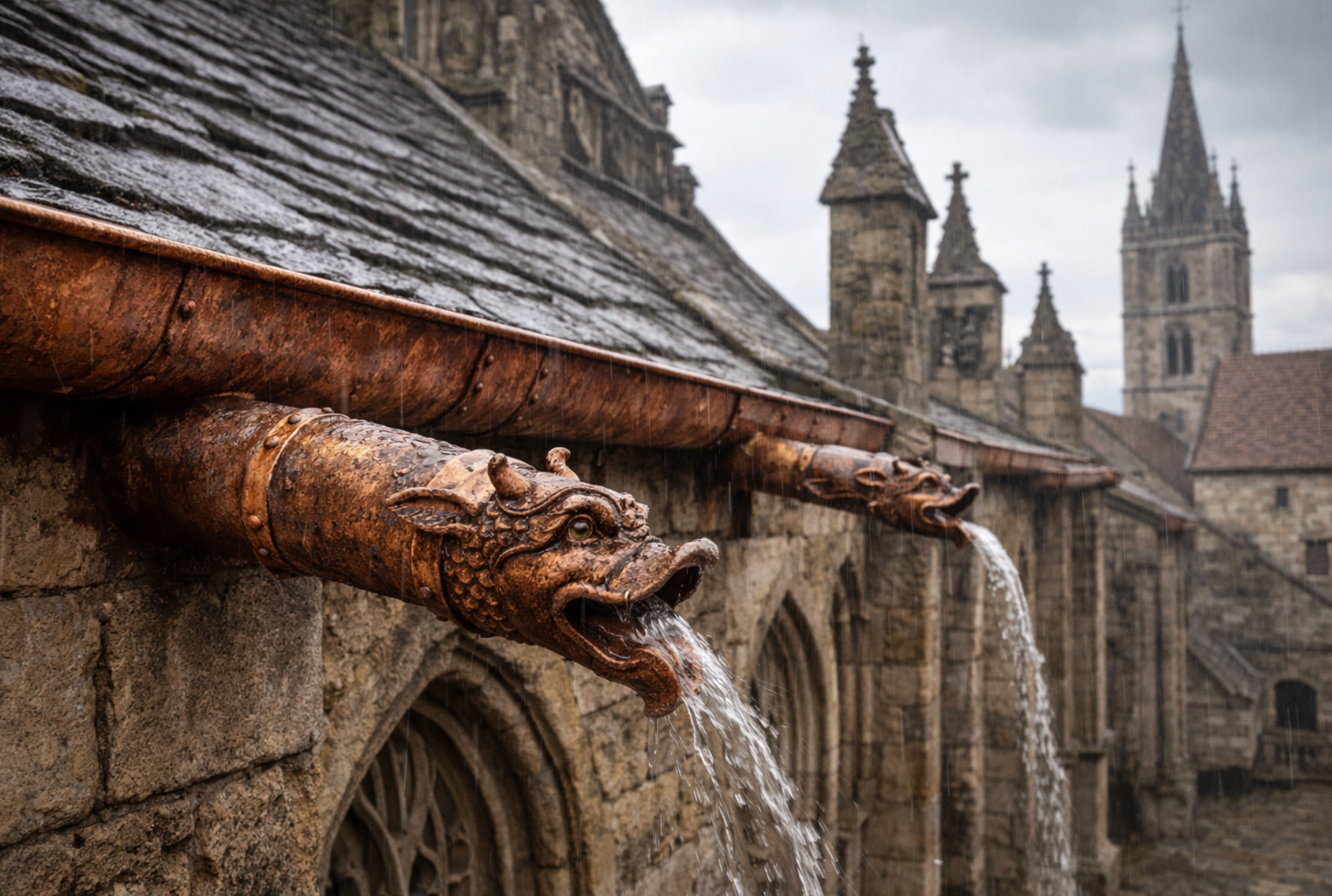
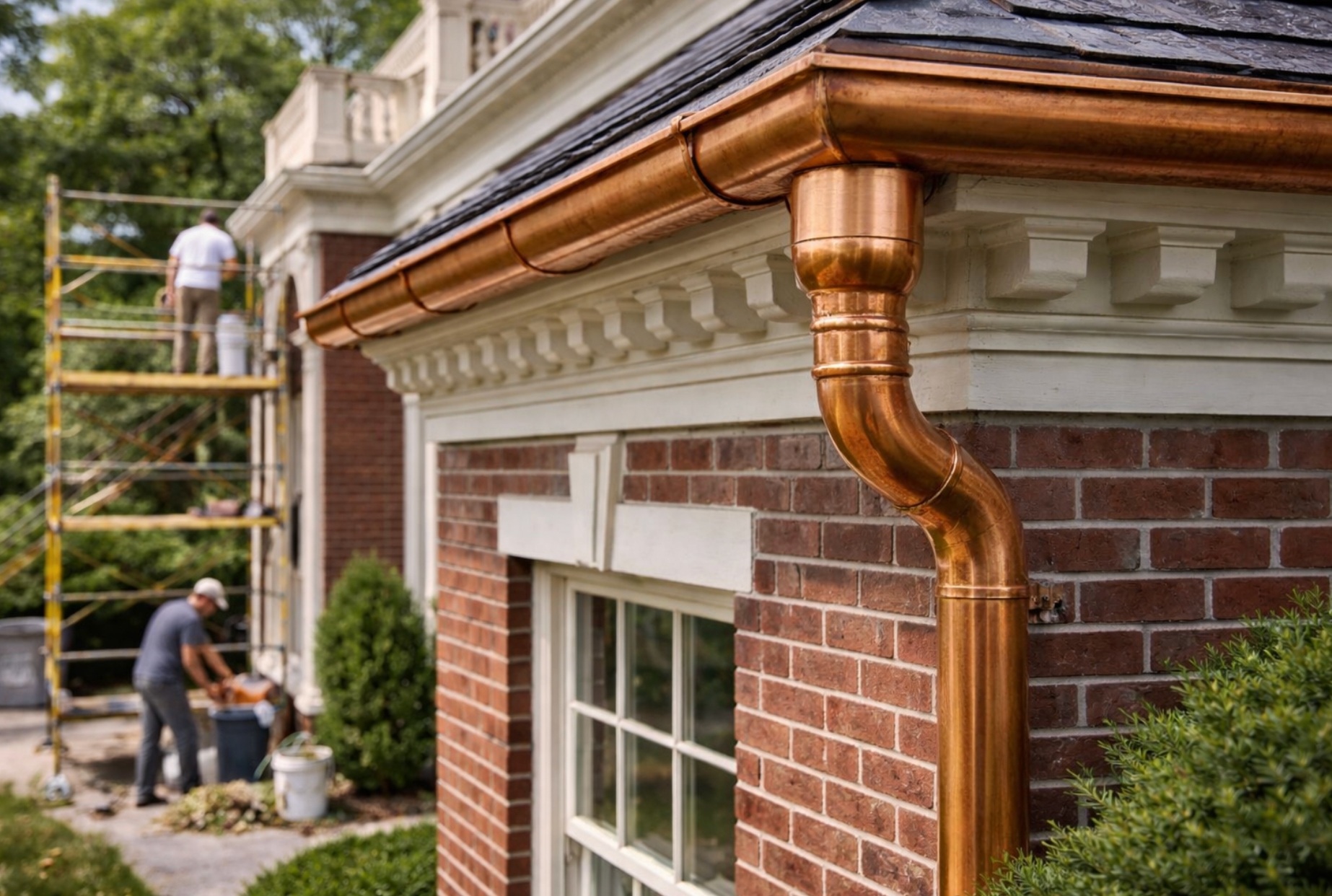
copper gutters in medieval europe

During the Middle Ages, copper gutters became more common on monumental structures such as cathedrals, monasteries, and fortified buildings. Medieval metalworkers hand-formed copper sheets into open channels and decorative spouts, many of which survive on Gothic and Romanesque buildings. The continued survival of these systems provided early proof of copper’s ability to withstand centuries of exposure without structural failure. Sources: VAM/AC, Copper Alliance


The Renaissance and Early Modern Period (1400s–1700s)

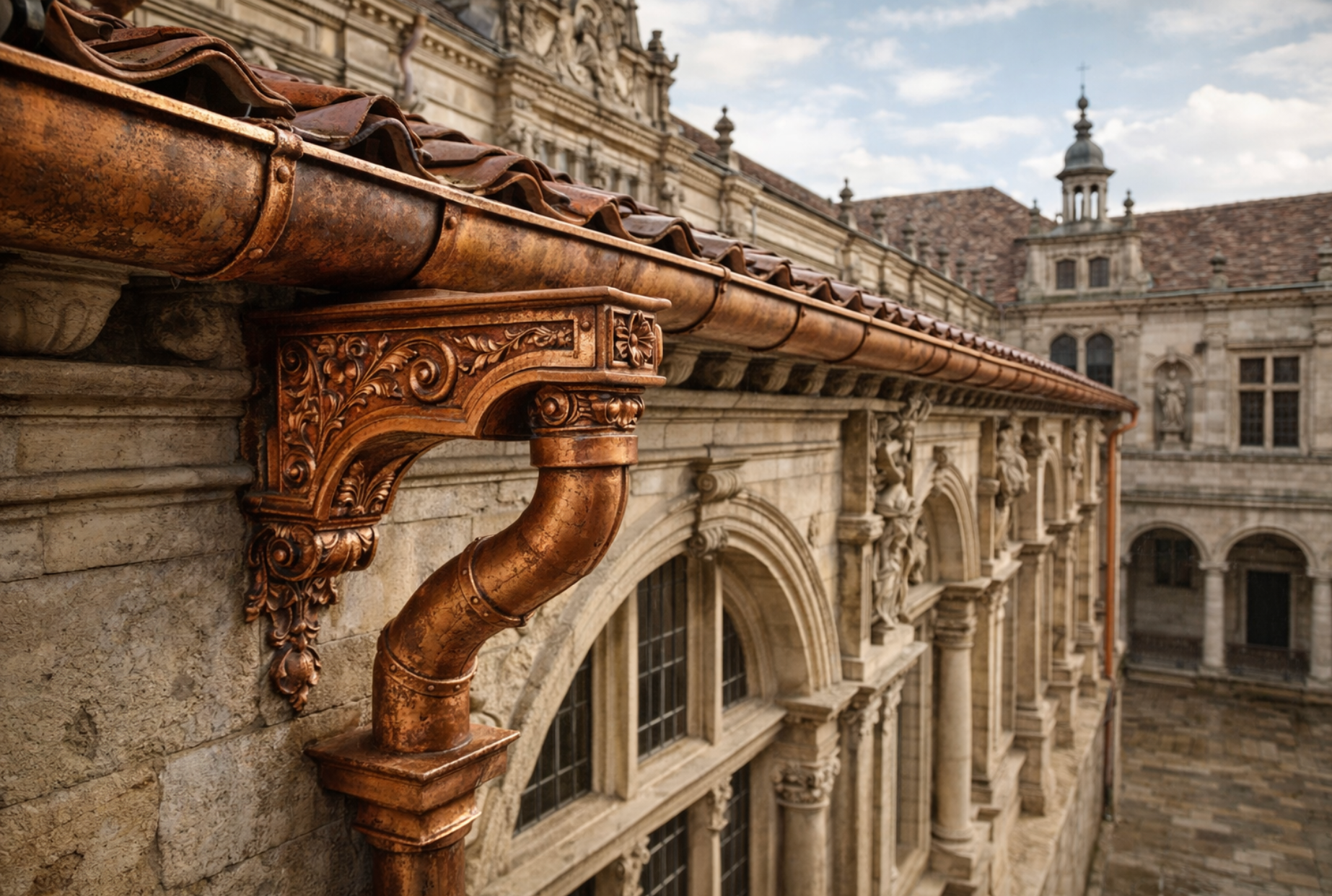
renaissance copper gutters and drainage systems

Advances in metalworking during the Renaissance expanded the use of copper in architectural details, including roof drainage. Improved rolling and hammering techniques allowed for more consistent copper thickness, making gutters easier to fabricate and repair. European civic buildings and estates increasingly relied on copper drainage systems as urban density and multi-story construction demanded better rainwater control.


Industrial Revolution and Mass Copper Production (1800s)

Industrial Revolution copper gutters and drainage systems

The Industrial Revolution transformed copper gutter production through mechanized rolling mills and standardized sheet sizes. This period enabled wider distribution of copper components and reduced reliance on purely artisanal fabrication. In rapidly growing cities, copper gutters were installed on commercial buildings, factories, and public institutions where long service life was critical amid industrial pollution and increased runoff.


Copper Gutters in Early American Architecture

early american copper gutter systems

In North America, copper gutters appeared prominently on colonial-era buildings, government structures, and early universities. Abundant domestic copper supplies and European building influence contributed to their adoption in prominent projects. Historic American buildings such as courthouses and churches often incorporated copper roof drainage systems that remain in place today, underscoring their durability in varied climates.


Decline During the 20th Century and Rise of Alternative Materials

early 20th century copper gutters

The 20th century introduced lighter, faster-to-install materials such as aluminum, galvanized steel, and vinyl, which shifted gutter manufacturing toward cost efficiency and mass housing needs. While these materials gained popularity, copper gutters became less common in new construction, reserved primarily for institutional buildings and specialized projects. The shift reflected economic priorities rather than performance limitations of copper itself. Sources: Energy.gov


Preservation, Restoration, and Architectural Revival (Late 20th Century)

late 20th century copper gutter systems

Historic preservation movements renewed interest in copper gutters as restorations sought material authenticity and long-term performance. Conservation standards emphasized retaining original copper drainage where possible or replacing it in kind. This era reinforced copper’s reputation as a historically accurate and technically proven solution for maintaining landmark structures. Sources: NPS Government


Copper Gutters in the Modern Era

copper gutters in the modern era

Today, copper gutters are recognized less as a default building component and more as a continuation of architectural tradition and skilled craftsmanship. Modern fabrication blends historical techniques with contemporary tooling, maintaining the same core material properties relied upon for centuries. The ongoing use of copper in roof drainage reflects a material legacy grounded in documented performance rather than trend-driven adoption.


Final Thoughts on Copper Gutters History

From early hand-formed channels in ancient civilizations to precisely fabricated systems used today, copper gutters represent one of the longest continuous material applications in building history. Their evolution mirrors advancements in engineering, metallurgy, and architectural priorities across cultures and eras. Understanding this history provides essential context for modern discussions about copper gutter use, performance, and application—topics that build naturally on this historical foundation.


If you live in Los Angeles or Ventura County and need Copper Gutters, please call us today! (818) 482-4607

Questions & Comments


Ask us anything and we'll respond within 8 business hours or less.

Contact Us

SHARE THIS

Latest Posts

diy gutters,diy gutter guide
By Will Schmidt July 28, 2025
Learn why DIY gutters are a bad idea for almost any homeowner.
mobile home gutters
By Will Schmidt July 27, 2024
Full complete guide on mobile home gutters, whom to hire, how much they cost, and what to expect on the day of installation.

downsoput placement,downspout guide
By Jon Daniels July 26, 2024
Gutter downspout placement guide to ensure your gutter company knows what they are doing. Need help, call us today!

hadnyman vs gutter contractor
By Will Schmidt July 8, 2024
Learn when to hire a gutter contractor or a handyman for your current gutter project.
signs you need new gutters
By Will Schmidt June 20, 2024
Homeowner guide, 10 signs you need new gutters, and how to get the best gutter company and the best gutter quote.

gutter guard guide
By Will Schmidt April 2, 2024
The 7 things every southern california homeowner should know before buying new gutter guards.
Does every home need a gutter
By Will Schmidt February 14, 2024
Fidn out if your southern california home really needs a gutter
black gutters,black gutters popularity
By Will Schmidt February 3, 2024
Fidn out why black gutters are more popular with homeowners and contractors in southern california.
how long do gutters last
By Will Schmidt January 29, 2024
This article explains how long each type of gutter lasts based on its material and your climate.

how long do gutter screens last,how long do gutter guards last
By Will Schmidt January 29, 2024
Find out how long gutter guards last and the top 3 gutter guards in the USA.
Show More